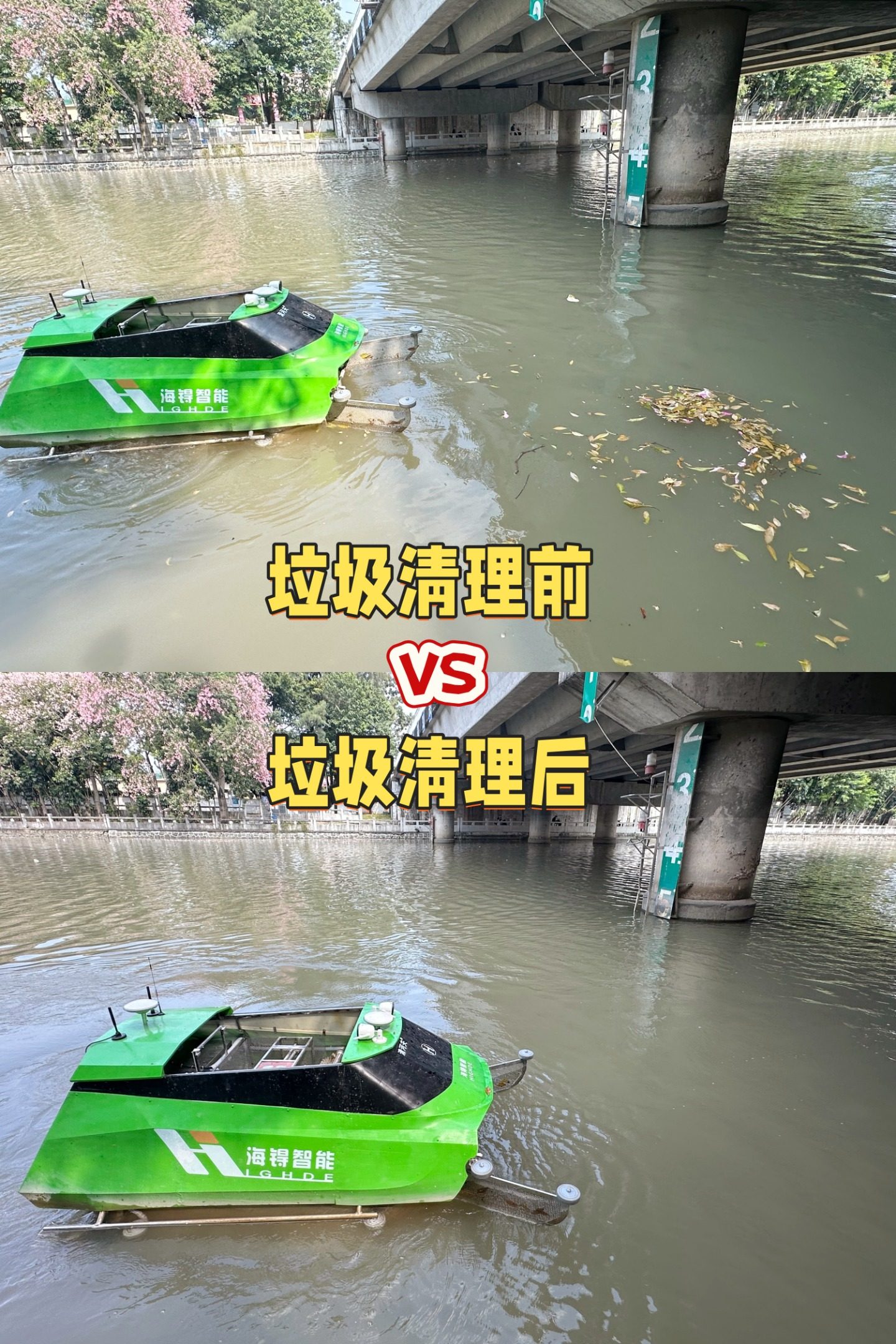
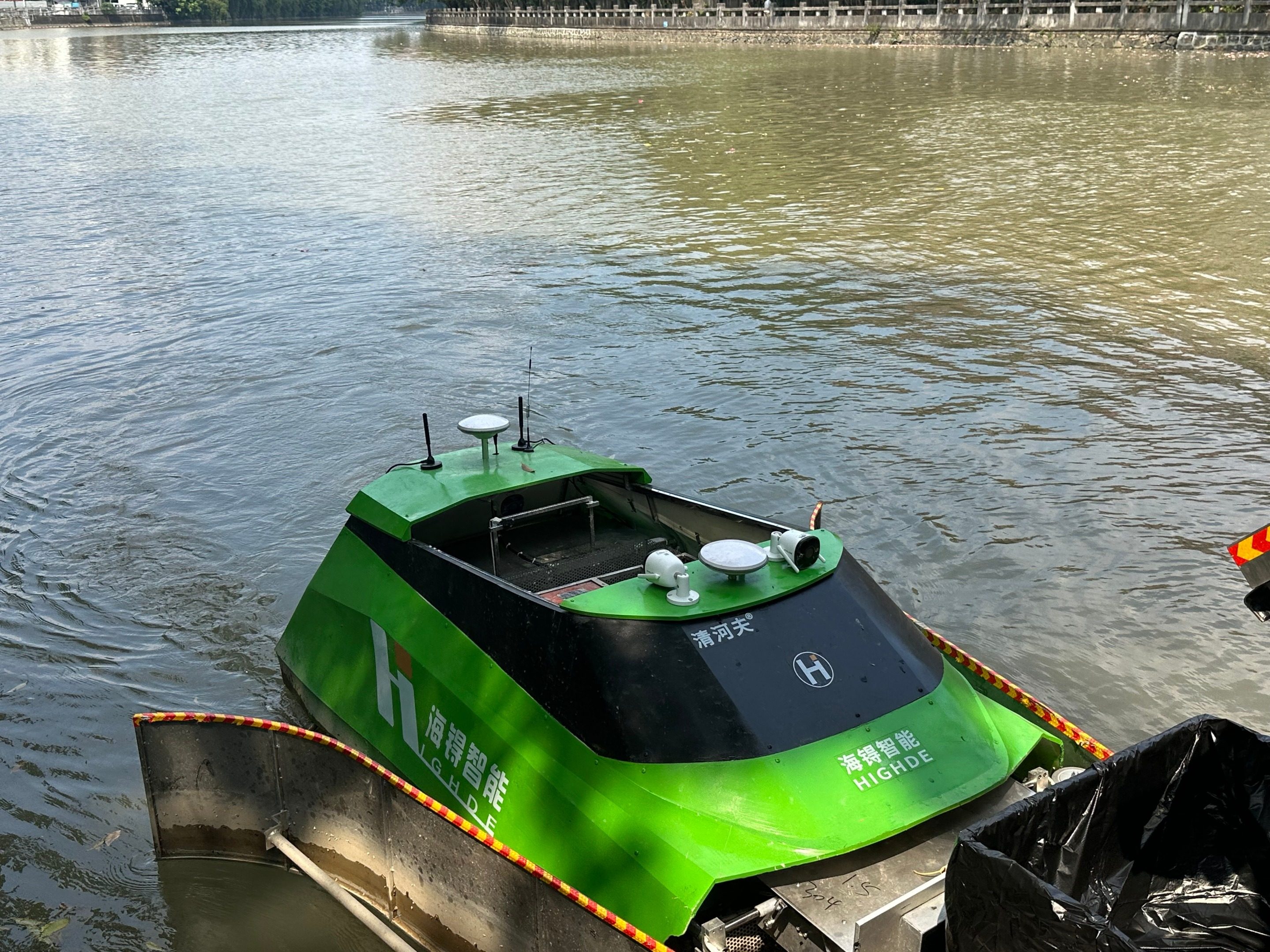
Seven thousand metres of river across four sub-districts, with a heavy standing load of fallen leaves and floating debris: manual skimming alone means a punishing workload, a long cleaning cycle and limited results. The river improvement project in Baiyun District, Guangzhou, deployed two unmanned cleaning boats in place of manual skimming — a technical approach worth unpacking.
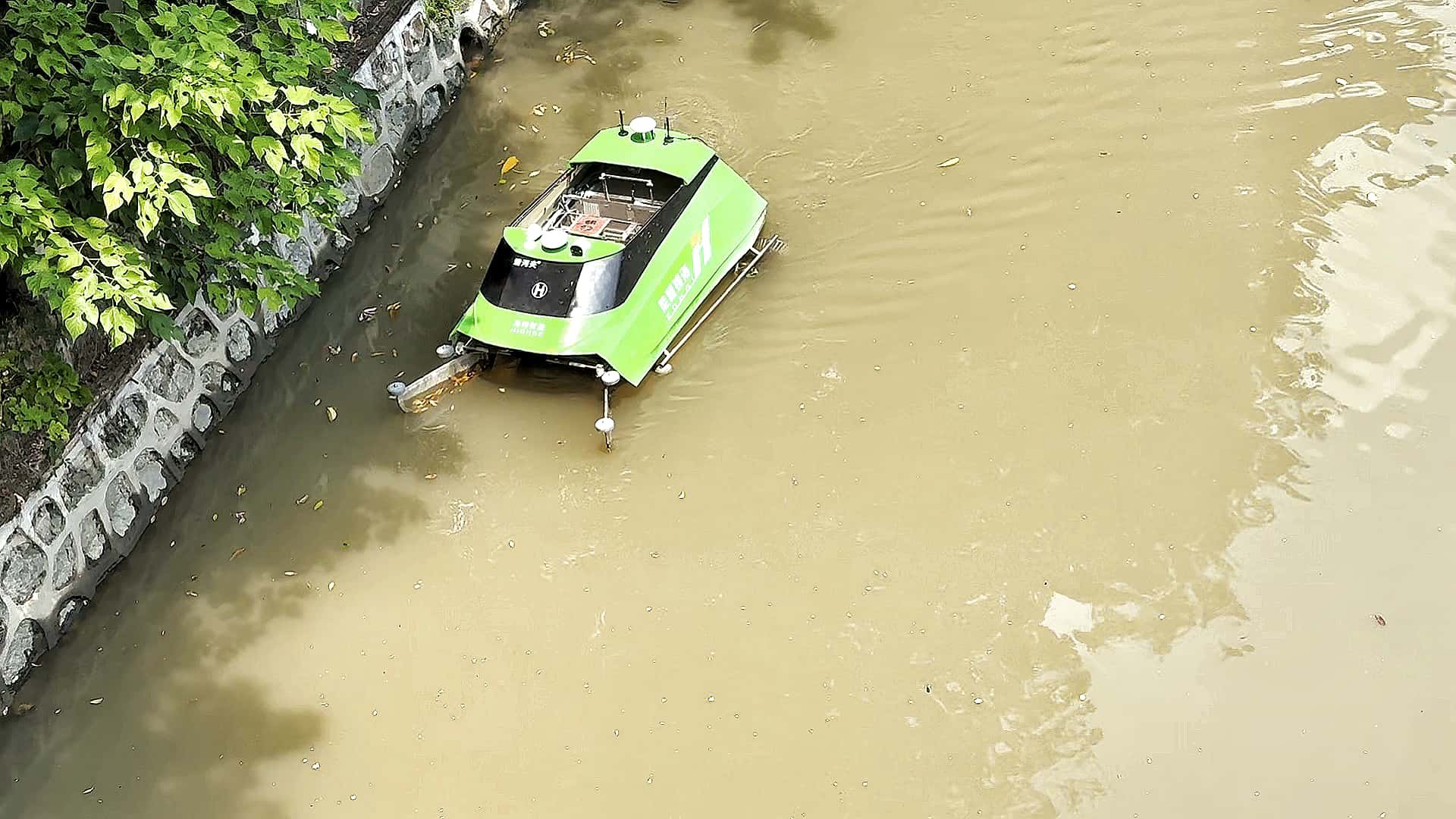
The boat's first step is knowing its route. It scans the water environment in real time, and managers can set the optimal working route remotely; with a proprietary adaptive algorithm the boat operates fully autonomously, undeterred by tree cover, signal blind spots under bridges, wind and waves or complex currents.
For perception and positioning, the boat carries onboard sensors that automatically recognise and collect leaves, branches, willow catkins, plastic bottles and bags and other floating debris. It is compatible with BeiDou, GPS and other satellite systems for centimetre-level positioning and precise heading, with strong interference resistance and a stable track.
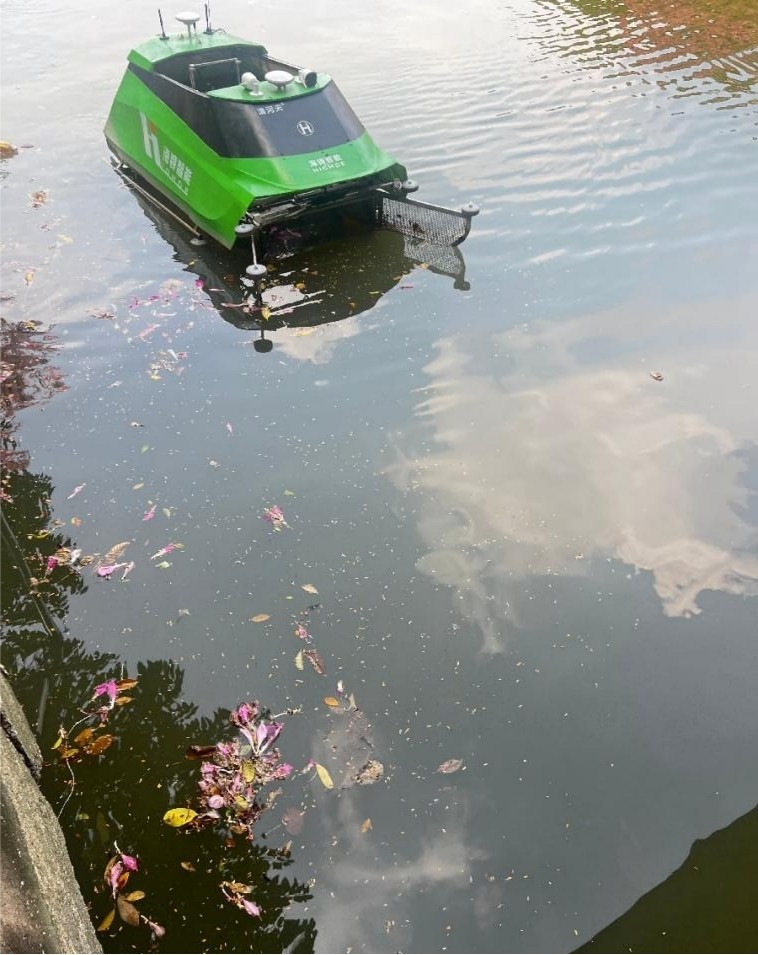
On efficiency, the boat cleans up to 3,000 m² per hour with 6–8 hours of endurance. It supports area cleaning, edge-hugging cleaning and targeted cleaning, and its edge-hugging pass gives 4 mm precision so no corner of the channel is missed.
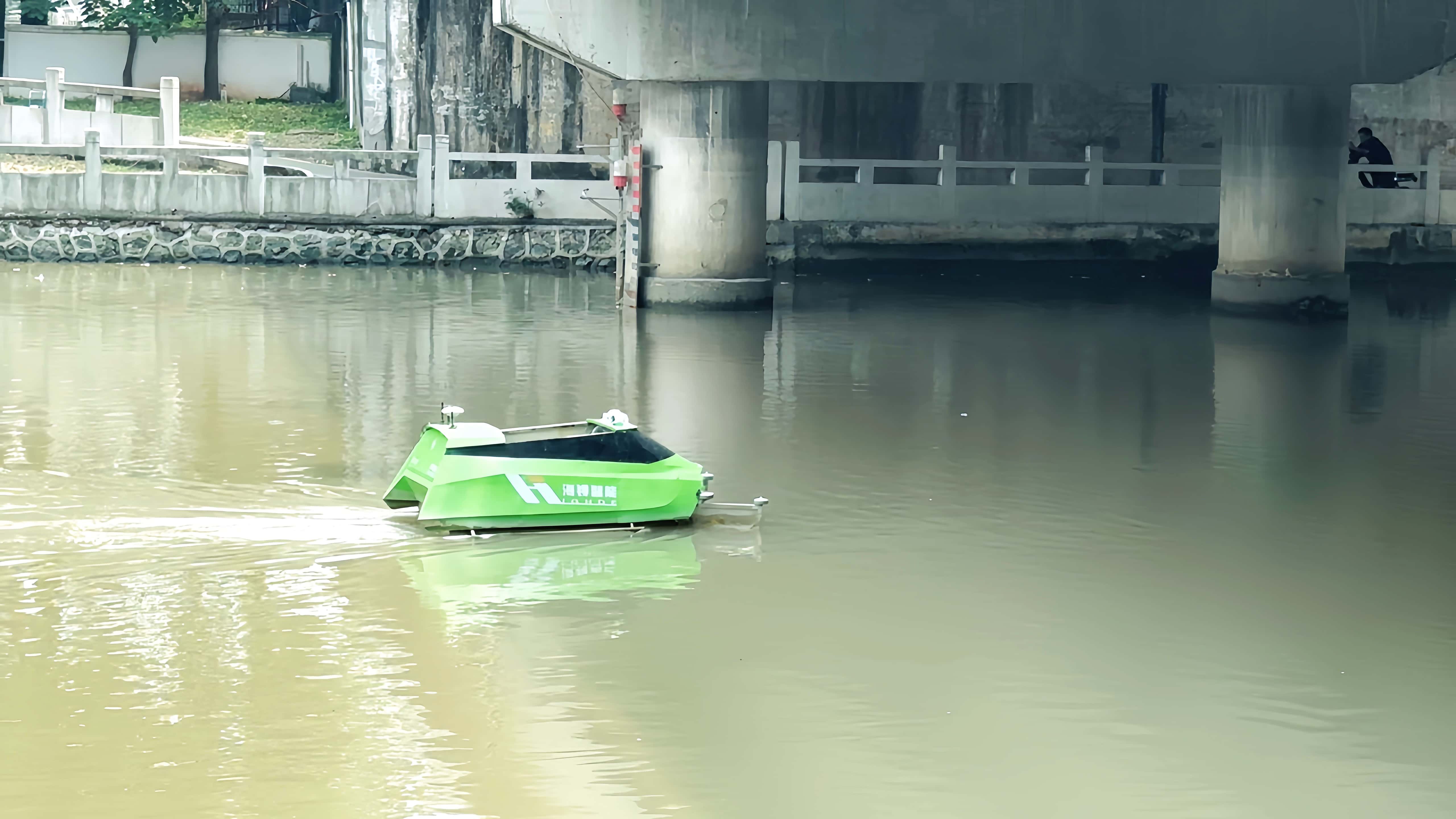
When the job is done the boat returns and docks by itself, with no manual handling. Its unmanned dock combines wireless charging with autonomous berthing, adapting to water level and providing real-time monitoring and multiple protections; it docks and charges automatically, reaching full charge in about two hours, and supports battery swap (about ten minutes) or extra batteries — charge on demand, without stopping work.
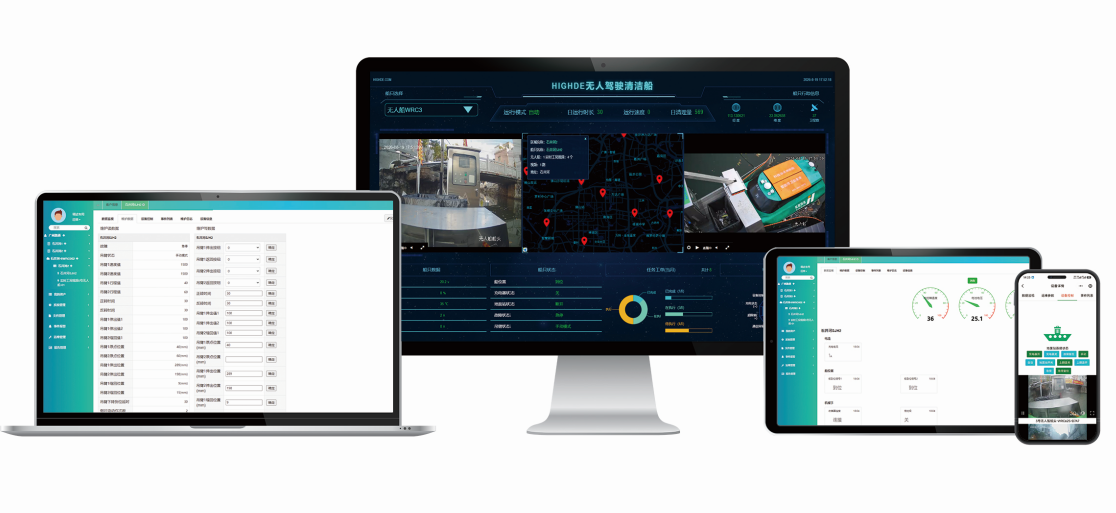
All equipment status and operating data feed into one platform that coordinates the PC dispatch centre, mobile app, onboard terminal and on-site monitoring screens. Vessel status and cleaning progress are visible on a single screen, enabling data-driven operational control.
From mapping to docking, the boat closes a 24/7 unmanned loop, shifting surface cleaning from "watching with eyes" to "scheduling by system" and giving long-term maintenance of a 7,000-metre river channel a stable technical foundation.