Two years ago, some river courses in Foshan, Guangdong were filled with black and malodorous water giving off unpleasant stench. Local residents held strong complaints and villagers rarely took walks along the riverside. Water conservancy departments devoted substantial efforts to river remediation, yet satisfying results remained elusive due to various factors.
Water is the foundation of human settlements and the source of life. Water environment has become an indispensable prerequisite when people choose places to live. Conventional water‑treatment measures in the past included blocking direct sewage discharge, implementing rain‑sewage diversion, and building more wastewater treatment plants and pipe networks. Nevertheless, for years, unbalanced municipal development, diverse economic interests, and ambiguous scope of responsibilities among competent authorities have rendered outfall governance extremely difficult. Besides, the large quantity and complexity of sewage outfalls prevented proper supervision, so the problem could never be fundamentally solved.
Strengthening water environment governance and improving rural human settlements constitute the key to ecological balance and sustainable water resource utilization. Faced with grim realities, conservation of ecological water environment calls for innovative approaches.
It is known that comprehensive water environment improvement relies on pollution source control and supervision over all sewage outfalls. Starting from 2020, severe river pollution in multiple watercourses of Chancheng and Guicheng Districts in Foshan mainly stemmed from frequent water leakage of old flap gates for pollution interception. Massive volumes of sewage kept pouring into rivers and causing grave water contamination.
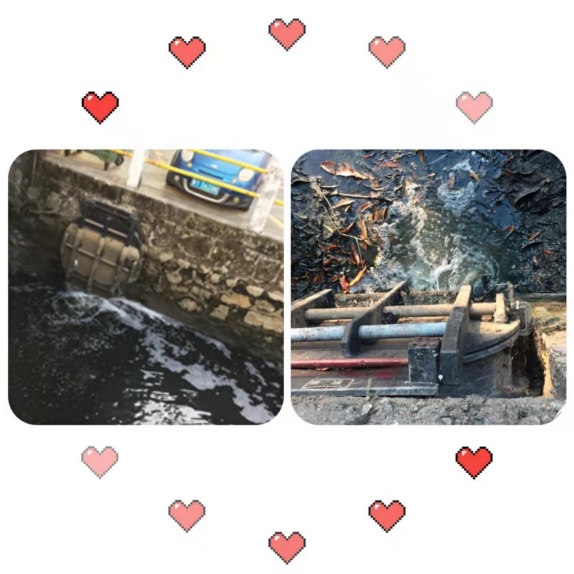
[The old‑style flap gates often leaked and brought about severe river pollution]
Therefore, river renovation brooked no delay. After consultations among multiple departments including the Water Conservancy Institute and sub‑district offices, a decision was made to replace old facilities with remotely‑operable intelligent flap gates. The intelligent outfall system device (referred to as intelligent flap gate), independently developed by Haide Intelligence, can intercept pollution on sunny days and drain floodwater on rainy days, thoroughly breaking the bottleneck of pollution‑source control in comprehensive water treatment. After reconstruction, river water turned clean with zero sewage outflow. River channels got beautified and pollution in tributary rivers was remarkably alleviated.
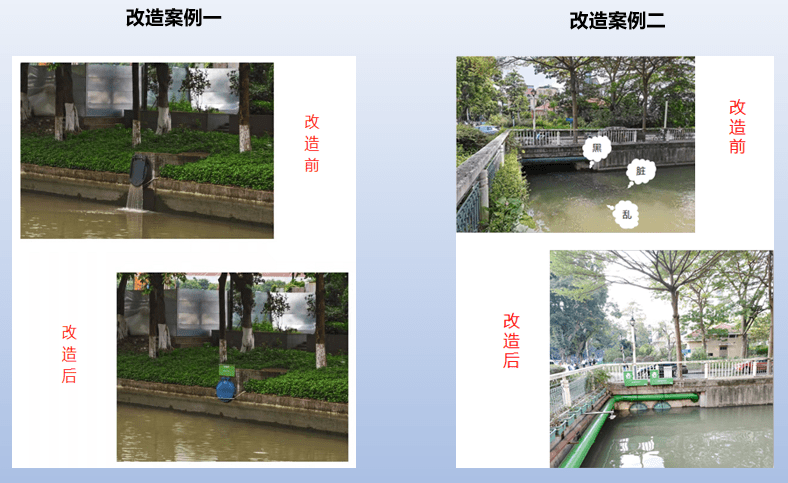
[Before‑and‑after renovation comparison chart]
Outfall Control Principle:
Active closure on sunny days: intercept pollution and prevent backflow to maximize sewage diversion to wastewater treatment plants;
Active opening on rainy days: drain floodwater, fully tap the capacity of pipe networks and guide clean rainwater into watercourses rapidly.
Active opening on rainy days: drain floodwater, fully tap the capacity of pipe networks and guide clean rainwater into watercourses rapidly.
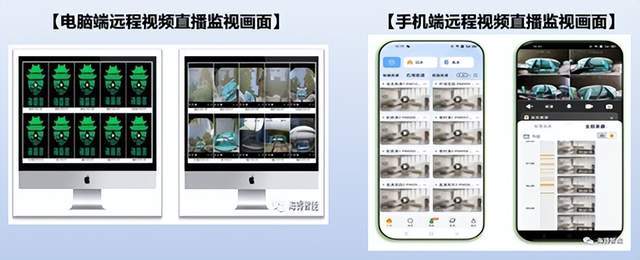
[Remote live‑video monitoring screen on computer and mobile terminals]
Admittedly, pollution‑source interception and control is merely the first step of comprehensive water environment governance. Joint efforts from multiple dimensions and parties are required to sustain ecological balance. Personal suggestions are listed as follows:
Integrate water environment governance with water pollution prevention. During renovation, actively carry out water source protection campaigns, accelerate pollution‑source interception and pipe connection, push forward sewage pipe network construction, conduct classified prevention and treatment for industrial, agricultural breeding and domestic pollution, and prioritize shutting down heavily‑polluting enterprises.
Rely on scientific and technological strength to restore aquatic ecological environment. Focus on constructing ecological wetlands, ecological river banks and ecological watercourses. Research new anti‑pollution technologies adopting aquatic plants and microorganisms suitable for hydrological conditions of Shanghai. Launch ecological restoration projects. Rebuild and rehabilitate aquatic ecosystems by creating favorable habitats for organisms, restore aquatic biodiversity, enhance self‑purification and carrying capacity of water bodies, and ultimately improve water environment.
Combine water environment governance with transformation and upgrading of economic development modes and structures. Foster low‑energy‑consumption, low‑pollution and high‑added‑value green industries through guidance and restraint mechanisms, vigorously develop the tertiary industry. Organically integrate water‑environment‑related elements with landscape gardening, leisure tourism and other sectors to attract more social investment and boost regional economic growth.
Enhance publicity work. First, strengthen legal publicity and improve the pertinence and effectiveness of law‑based education concerning water environment. Second, diversify publicity forms. Reach out to residents, grassroots communities and enterprises, and conduct multi‑form and multi‑level promotional activities. Third, reinforce supervision and inspection over special legal publicity and education for water environment, and keep track of work progress in a timely manner.