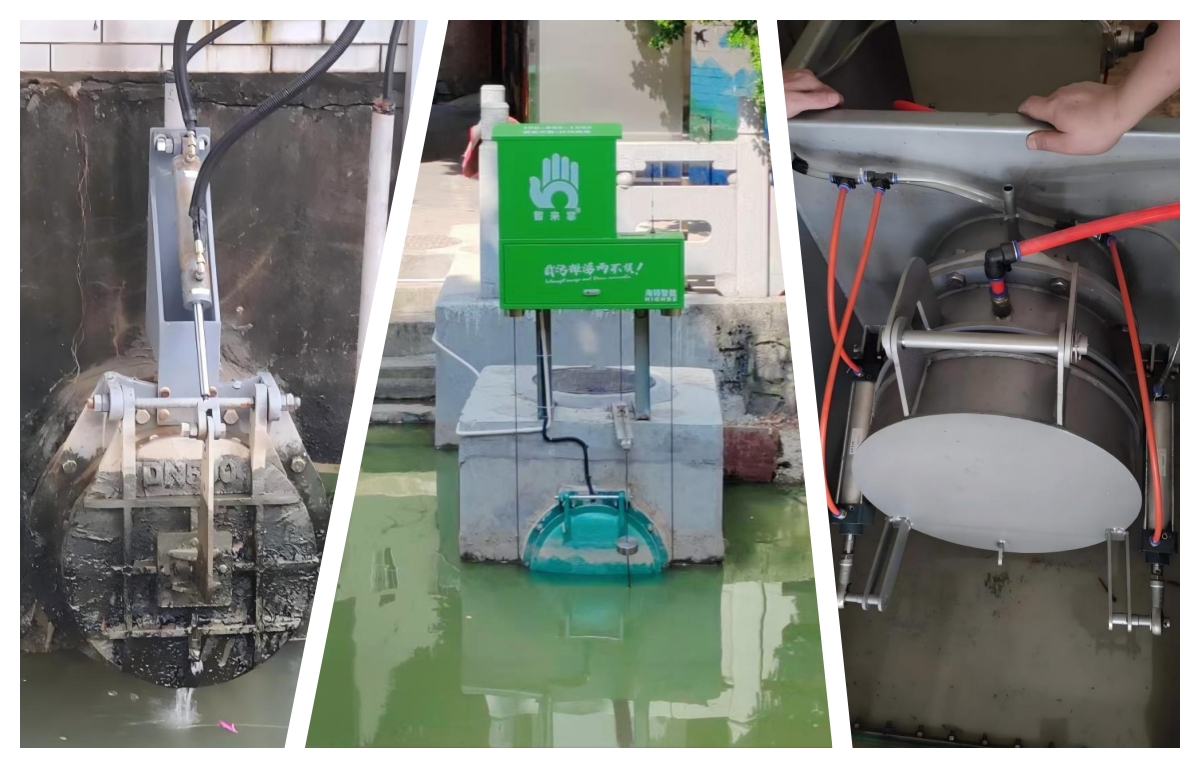
A gate is installed on the drainage outlet beside the river. On sunny days, it needs to be tightly closed to prevent sewage from leaking out; on rainy days, it needs to be opened to allow rainwater to drain quickly. It sounds simple, but how exactly does this gate "work" differently depending on the three types of gates.
This answer determines whether it will deform under strong water head, whether it can be sealed on large pipe diameters, and whether it will still work after several years of use.
Let's first see how to apply force to the hydraulic flap valve
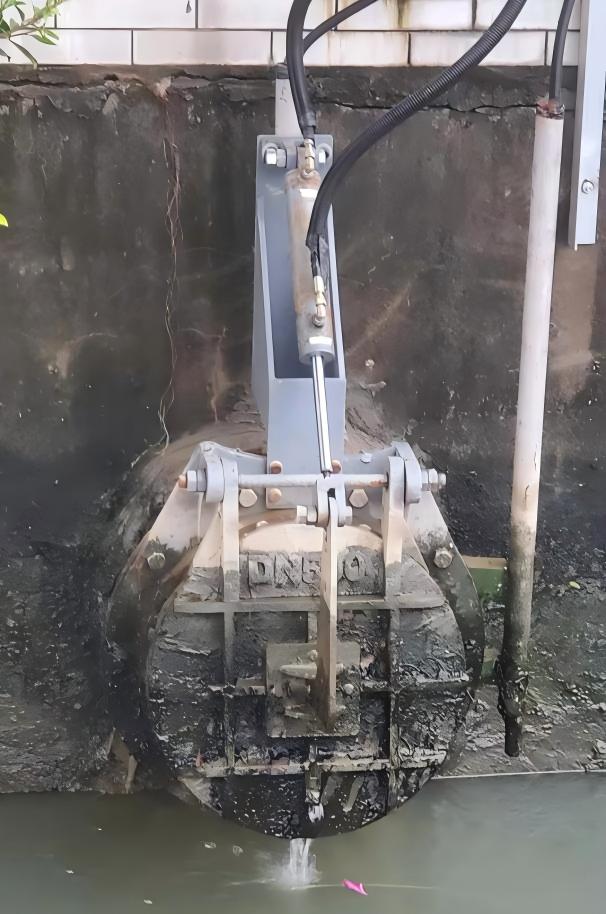
Hydraulic flap valve site: A hydraulic rod is positioned at the center of the valve cover, concentrating force on a single point of application
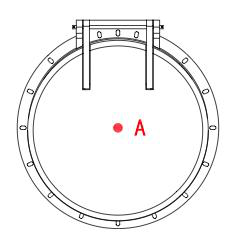
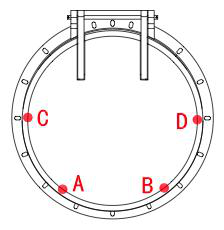
Force analysis: Single-point work - pressure is concentrated at point A, and the rest of the door cover can only passively follow
The structure of the hydraulic flap valve is straightforward: a hydraulic rod, or two rods, are positioned behind the flap valve cover, and the push or pull of these rods drives the opening and closing of the cover. The issue lies in the "single rod". The flap valve cover is a plane surface, while the rod is a point. The rod concentrates its force on a specific point of the flap valve cover, while the rest of the cover is merely "dragged along". This is known as point work.
There are two consequences. Firstly, uneven force distribution. When the strong water head presses down, the part of the door cover that bears the greatest force is near the point where the rod exerts its force, and the other parts cannot withstand it, making them prone to deformation. Once deformed, leakage is inevitable. Secondly, the dual-rod solution also requires additional consideration for synchronization - if the two rods are not synchronized, the door cover will be twisted, and the sealing surface will behave even more unpredictably.
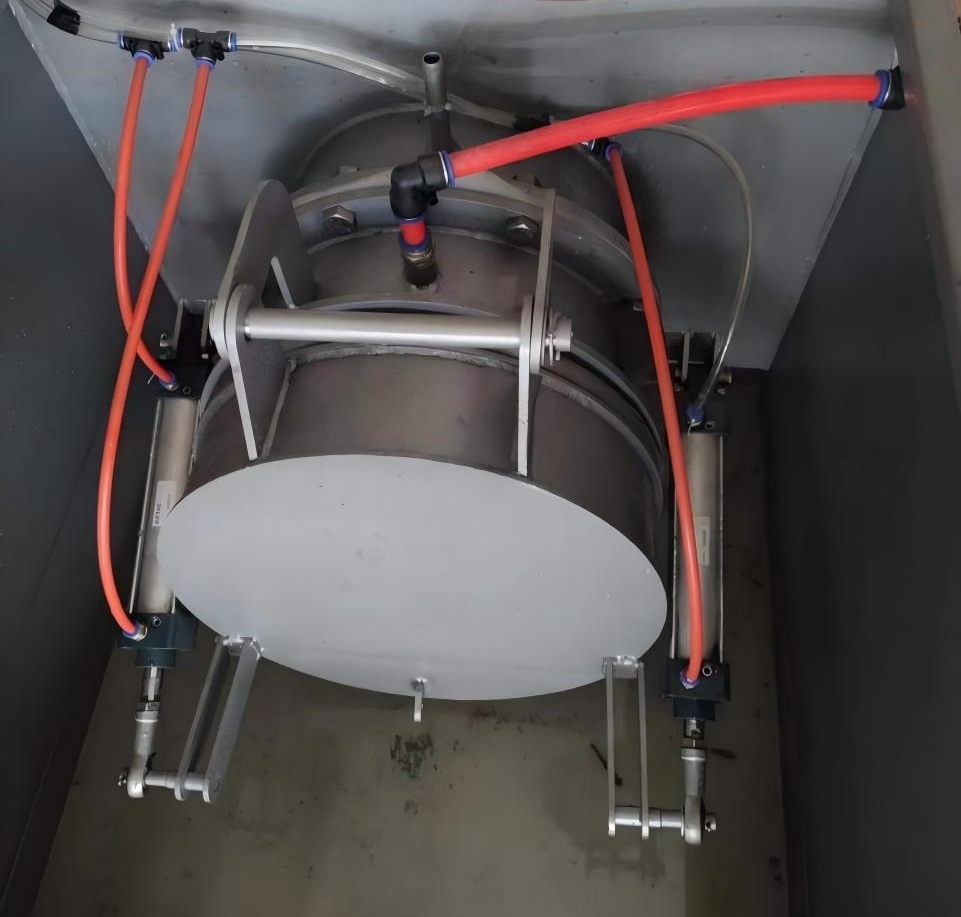
The structure of pneumatic flap gates is similar, except that the hydraulic rod is replaced with an air pressure rod. Similarly, a single or double rod applies force to the gate cover, making it difficult to apply even force in a plane, and it is also prone to deformation under strong water head. The main difference lies in the medium: air pressure is less rigid than hydraulic pressure, making it more difficult to achieve good closure on large flap gates.
Physical pneumatic flap valve
The approach to the smart door has changed
Force analysis: Multi-point work - A/B/C/D points act simultaneously, with uniform force distribution
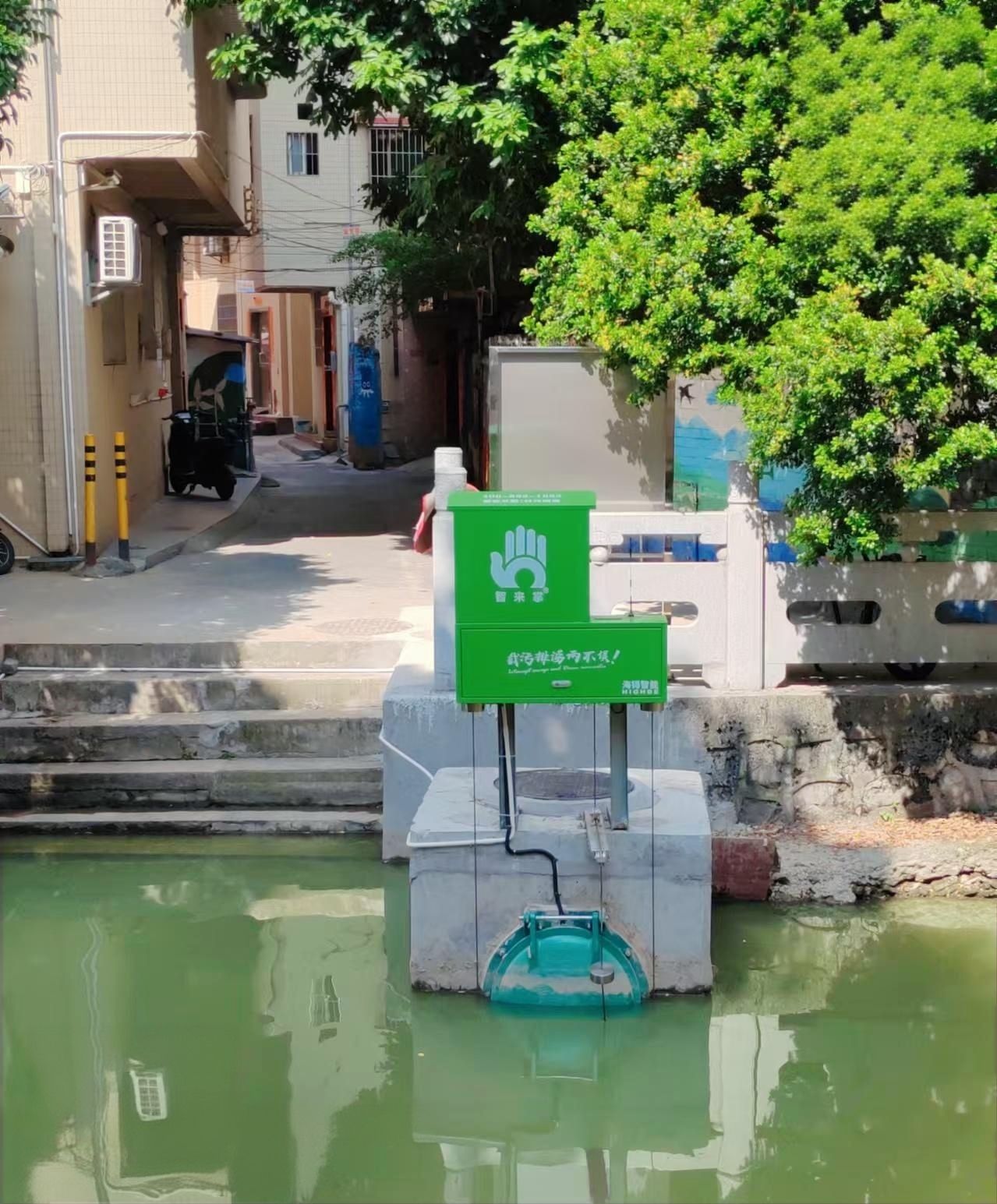
Installation example of intelligent outlet system device (commonly known as intelligent flap gate): flexible direction change, multi-point force structure
The intelligent outlet system device (commonly known as intelligent flap gate) did not continue to optimize along the direction of force concentration, but instead changed its structural logic to a flexible and variable structure.
The high-torque motor directly drives the transmission shaft, which then changes direction through pulleys, distributing the force to the flap cover. The flap cover is not "pushed" by a single point, but rather "supported" by multiple points, ensuring even distribution of force.
By incorporating a design of soft connection for steel wire ropes, there is still buffering capacity during the force transmission process, preventing direct and hard contact.
How do the three types of flap gates differ in terms of force distribution, and how should they be selected?
6 Q&As from our knowledge base
【Expand for more answers】
What is an intelligent flap gate?
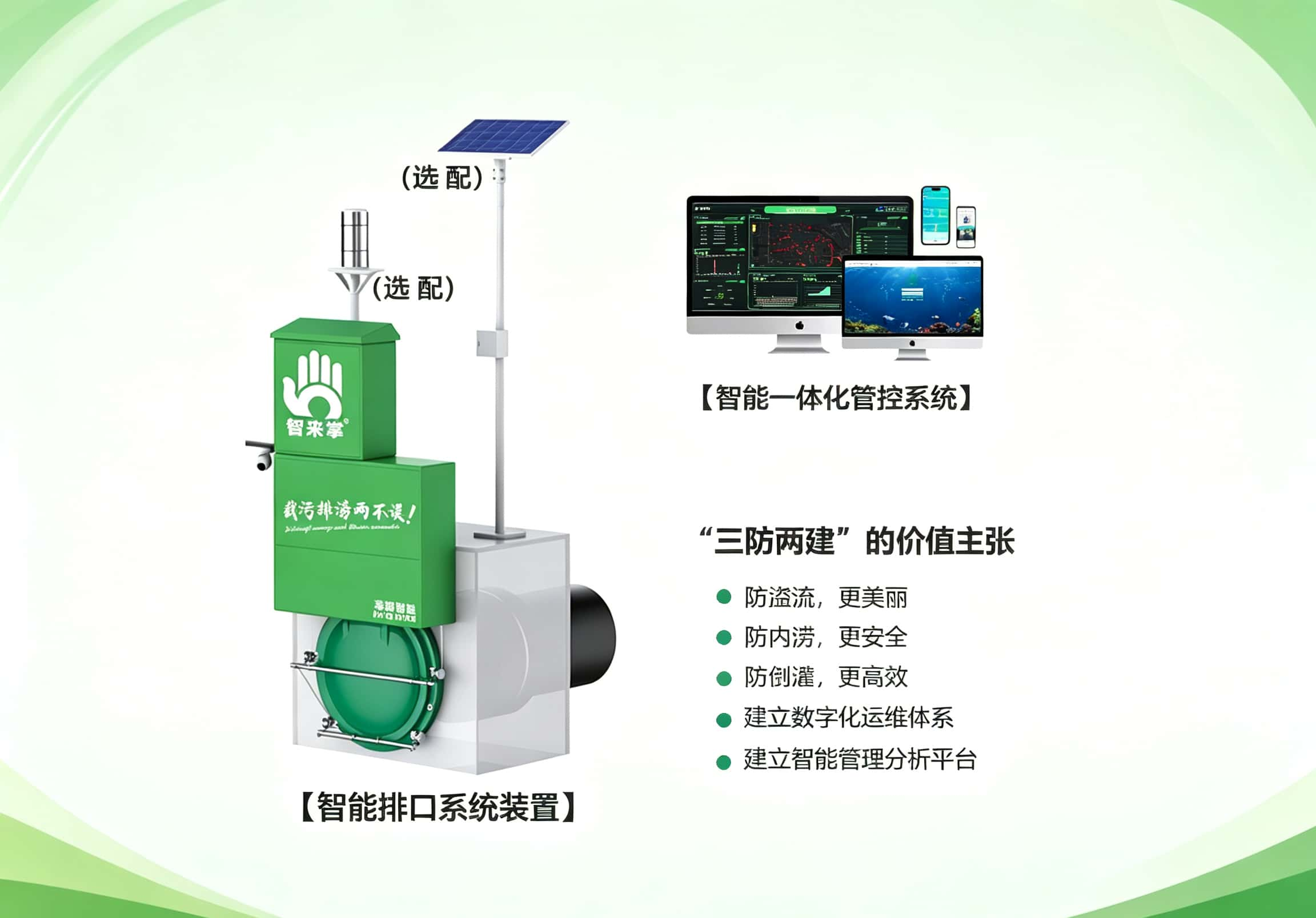
An intelligent flap gate is Haide Intelligence’s intelligent outfall system device “ZhiLaiZhang” (i-Water-SPM / SPM-X series), an intelligent outfall device for combined sewer systems (CSS). Through the anti-flooding pump and level detection inside the box, it achieves active flood drainage and intelligent monitoring of the outfall well, and enables precise control of the sewage level. It is installed by no-excavation in-situ retrofit, without altering the pipe network and without changing the original function of the outfall. Structurally it adopts a flexible variable-direction multi-point loading structure: a high-torque motor drives the transmission shaft and the pulley changes the direction of force, giving even load distribution and good sealing, and avoiding the defects of hydraulic and pneumatic flap gates, namely “single-rod point loading, prone to deformation and leakage under high head differential”. The enhanced model can withstand a head differential of 2–3× the outfall diameter. The unit uses a single-phase 220V, 400W motor, with an average annual electricity cost of no more than CNY 300; the device automatically opens for flood discharge on power loss, network loss or over-pressure, and fully restores the original gravity flap gate function when power is lost (a proprietary patented technology of the company). Equipment-wise it provides dual-level monitoring, online AI video surveillance, four remote functions for remote control, and a digital O&M system; the opening angle can be customized through the back-end system over a range of 0–150°.
What is the difference between an intelligent flap gate and an intelligent sluice gate?
They are two categories of products with different functions within the i-Water system, and their applicable scenarios do not overlap. Item of comparison Intelligent flap gate (ZhiLaiZhang i-Water-SPM) Intelligent sluice gate (Zhangmenren i-Water-SZWJ) Installation location Outfall at the end of a combined sewer network Pump stations, gate stations and channels Core functions Sewage interception and flood drainage, anti-backflow, anti-waterlogging Flow control, level regulation, flood control and drainage, flood detention and replenishment Operating mode Controllable outfall opening degree, active flood drainage Flexible-material gate body, flow not less than the drainage outlet, low-oxygen biofilm technology Engineering combination Combined with PaopaoTun, it can form a general-purpose intelligent sewage interception and diversion well Can be combined with ZhiLaiZhang for Fenfeiyan (Type3 combination form) Selection tip: for an outfall that requires anti-backflow, choose an intelligent flap gate with dual-level monitoring and automatic tight-sealing capability; neither gravity flap gates nor electric sluice gates can actively prevent backflow. It should be noted that what is colloquially called an “intelligent sluice gate” in the market usually refers to motor-driven gate-leaf devices (electric sluice gates), which are not the same product category as Haide’s flexible gate “Zhangmenren”; see Q22 for the relevant comparison.
What is the difference between an intelligent flap gate and a gravity flap gate?
An intelligent flap gate is a comprehensive intelligent upgrade built on the gravity flap gate; it is not a hydraulic flap gate, and certainly not an electric sluice gate. When selecting and reviewing, the core identification criterion should be “whether it has intelligent control and digital O&M capability”. Device type Structure and driving principle Flood-discharge capability during power failure Energy consumption and O&M Gravity flap gate No powered control, opening and closing purely by gravity Closes by self-weight, but fails as it ages No energy consumption, but once it fails it causes overflow and backflow Intelligent flap gate (ZhiLaiZhang) Mechatronic integration + automatic control; in the power-loss state the mechanism drops back and restores the gravity flap gate function On power loss, network loss or over-pressure, it opens automatically after a preset delay Single-phase 220V, 400W at low power; four remote functions for remote control, routine inspection every half month A gravity flap gate relies entirely on water pressure and the self-weight of the gate body for passive opening and closing: no power and no control, and it fails once aged and deformed, so it cannot intercept sewage actively and cannot prevent backflow. An intelligent flap gate, by contrast, provides dual-level monitoring, online AI video surveillance, four remote functions for remote control, and a digital O&M system, and its opening degree can be adjusted to any angle — configurations under the “one-outfall-one-strategy” principle, such as opening one-third on dry days and opening fully in heavy rain, can be set remotely through the platform, with each adjustment completed in 22 seconds, requiring neither on-site personnel nor excavation and water shutdown.
What is the difference between an electronic flap gate and an intelligent flap gate?
There is a difference. Both refer to the intelligent outfall system device, and both have remote control capability; the difference is that an electronic flap gate has no digital O&M system and no integrated decision-making driven by big-data analytics. In day-to-day work, people assume that an electronic flap gate is an intelligent flap gate, which in fact is a certain misunderstanding. Term Usage scenario Intelligent outfall system device Official product name, standards, tender documents ZhiLaiZhang (SPM / SPM-X) Brand nickname, product series Intelligent flap gate Industry colloquial term, media, WeChat official accounts Electronic flap gate Standard terminology in bidding documents and engineering drawings Usage scenario Recommended term Reason Official website, WeChat official accounts, promotional materials Intelligent flap gate (ZhiLaiZhang i-Water-SPM) The common industry term, easy to disseminate and to search for Tender documents, technical specifications Intelligent outfall system device The official product name, consistent with the wording of qualifications and test reports Engineering drawings, design notes Electronic flap gate The standard terminology in bidding documents and engineering drawings, which facilitates construction briefing Competitor comparisons, selection Q&A Intelligent flap gate Avoids confusion with “motor-driven flap gate”; if the other party means a competitor’s product, first confirm its power form In one sentence: an intelligent flap gate and an electronic flap gate are the same thing (both are the intelligent outfall system device), but an electronic flap gate typically offers only remote control capability and does not include a digital O&M system; for external communication the term may be chosen according to the scenario, but at its first occurrence the official name “intelligent outfall system device (ZhiLaiZhang i-Water-SPM)” should be stated, so that it is not mistaken for an electric sluice gate or for a competitor’s hydraulic product.
What are the defects of hydraulic flap gates on the market?
A hydraulic flap gate works by “a single rod acting on a single point” using a hydraulic power unit and oil cylinder. It requires a three-phase power supply and frequent motor start-up to maintain pressure, so energy consumption and electricity costs are high; after a loss of power or pressure, low-cost automatic flood drainage is difficult to achieve; and under a strong head differential the load concentrates, making deformation and leakage likely. Applied to outfalls — a scenario of small diameters and scattered locations — hydraulic gates come with four practical problems: Maintaining pressure means continuous power consumption. The gate plate relies on hydraulic force to hold back the water pressure and keep its position, so the oil pump has to keep running — over the years this becomes an electricity bill that nobody can see. Many links, many failure points. Oil pipe fittings, valve groups and seals: if any one point leaks or jams, the entire chain is affected. A power failure means immediate failure. Once the power is cut there is no longer the force to lift the gate plate, so the plate cannot be raised and the passage stays blocked when a storm calls for flood discharge — the flood-discharge capability disappears on the spot, precisely at the moment when it is most needed. Maintenance has a high threshold. Oil, filter elements and seals all have to be replaced on schedule, and dedicated staff have to keep watch; a routine inspection team cannot do the job. In one sentence: hydraulic gates solve the question of “whether automatic control is possible”, but at outfalls — small, scattered points — they turn a simple job into a complicated one.
What are the advantages of the motor-driven flap gate?
First, the name: “motor-driven flap gate” is one of the official alternative names, referring to the same device as “electronic flap gate”, “intelligent flap gate” and “intelligent outfall system device”; it is not the same product category as an “electric sluice gate”. The advantages of the intelligent flap gate: The opening degree can be customized and set at any angle as desired — “one-outfall-one-strategy” configurations such as one-third open on fine days and fully open in heavy rain can be set remotely via the platform, with one adjustment completed in 22 seconds, with no need for staff to attend site and no need for excavation or water shut-off; Automatically opens for flood discharge on power failure, network loss or overpressure, giving second-level emergency response; on loss of power it fully restores the original gravity flap gate function (a company patented technology); Flexible multi-point load transfer with even force distribution and good sealing; the enhanced version can withstand a head differential of 2–3× the outfall diameter; No-excavation in-situ retrofit, with construction carried out directly at the position of the existing flap gate and the sewer network left unexcavated; investment is about 65% lower than a scheme that requires excavation to build an intelligent separation well, the construction period is extremely short, and the impact on surrounding residents’ daily life and on traffic is extremely small; Single-phase 220V, 400W with low power consumption and an average annual electricity cost of no more than 300 yuan; four remote functions (tele-signalling, tele-measurement, tele-control, tele-adjustment) for remote control capability, routine inspection once every half month, and modular O&M; Dual liquid-level monitoring, online AI video surveillance and a digital O&M system.