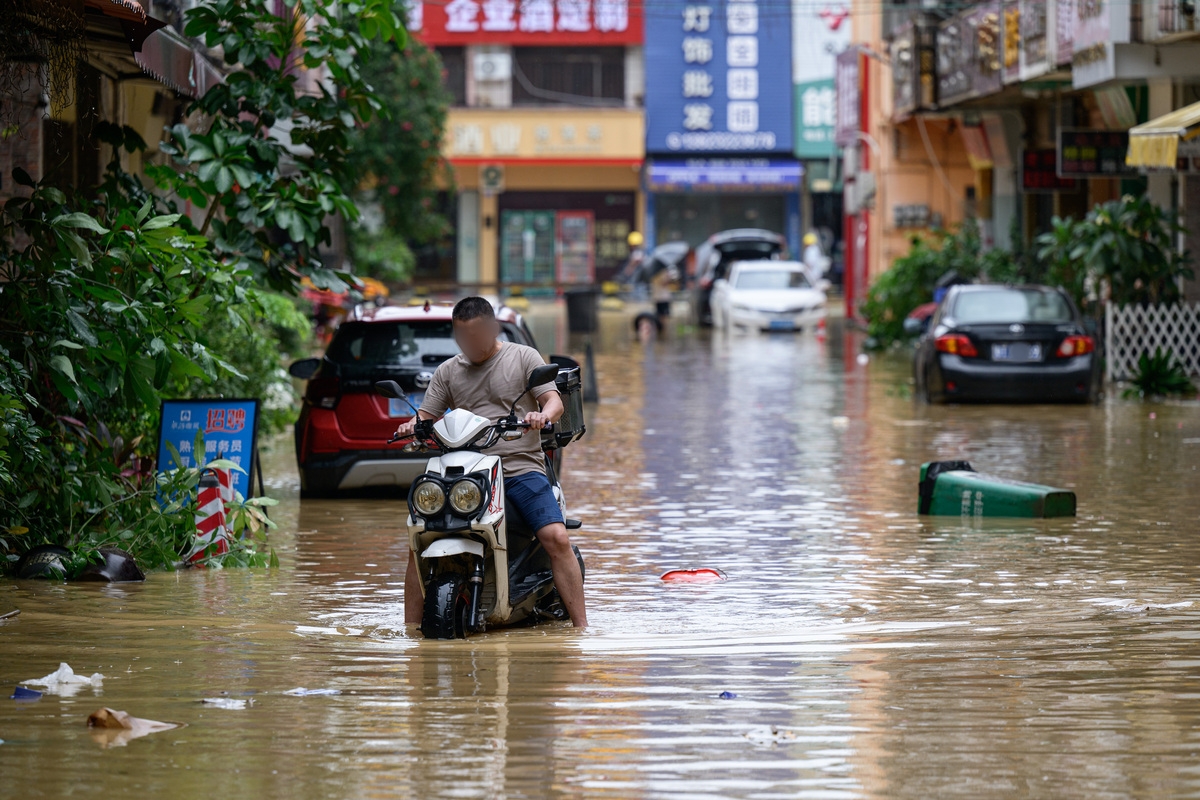
During heavy rain, many cities experience flooded roads and inundated garages. Hopes for solving urban flooding often rest on stormwater/sewage separation projects. What exactly is separation, what causes flooding, and how does digital water management fit in? This article explains the underlying drainage logic.
1. How does urban flooding form?
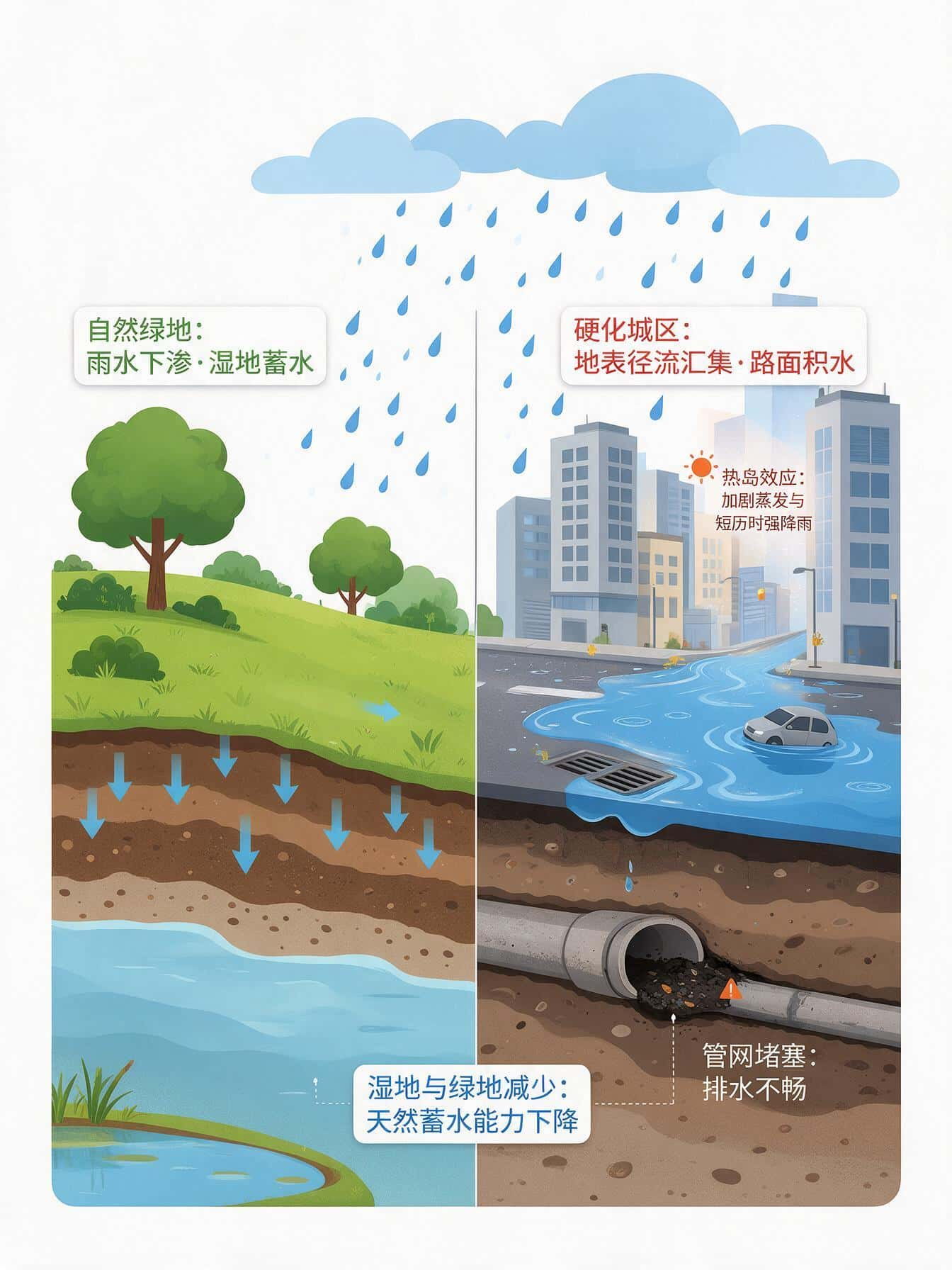
Flooding occurs when short-duration rainfall generates surface runoff faster than the drainage system can convey it. There are four main causes:
More impervious surfaces. Roads and roofs prevent infiltration, so rainwater collects rapidly on the surface. Ponds and wetlands disappear, and the city's natural "sponge" storage capacity declines.
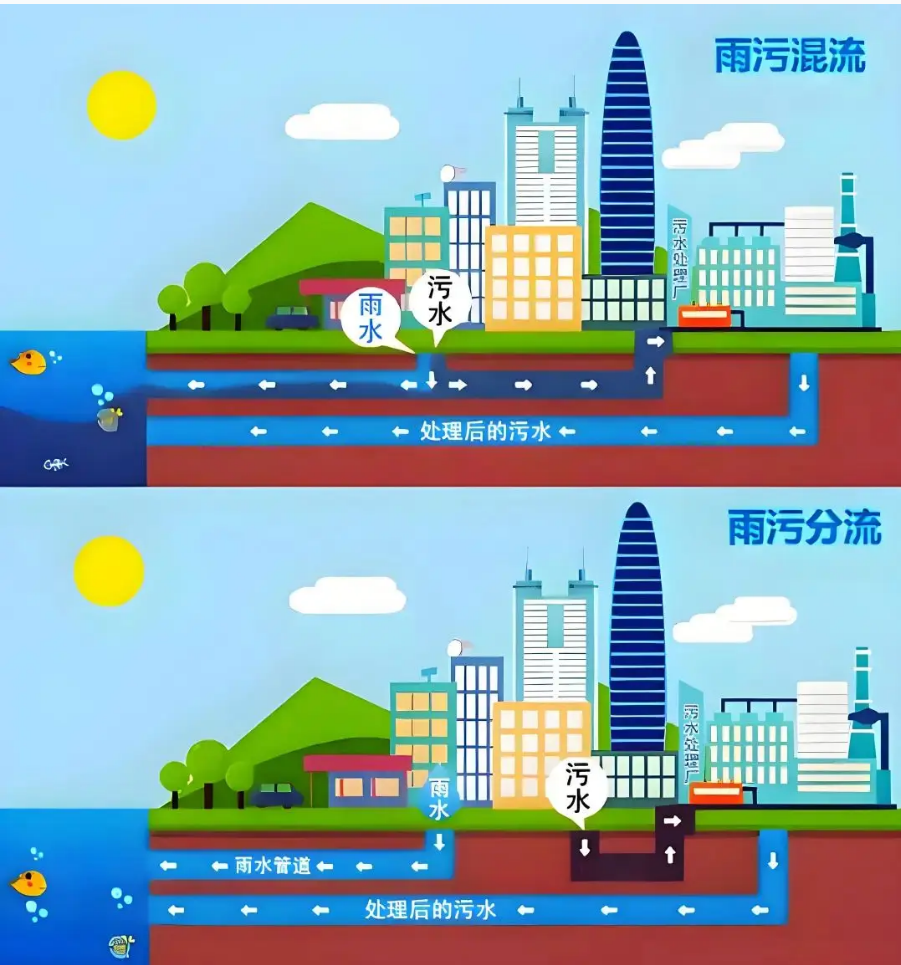
Combined sewers and insufficient capacity in older districts. Rainwater and sewage share one network. In dry weather it carries only sewage; in a storm, large volumes of rainwater saturate the pipe, the mixed flow surcharges onto streets, and combined sewage discharges directly into rivers, causing black-odorous water.
Ageing, silted and misconnected pipes. Early pipes were built to low standards with small diameters; sediment reduces the flow section further, and wrong connections reduce efficiency. Underground defects are hard to find by manual inspection.
Extreme rainfall and downstream river backwater. Short intense storms exceed design standards; when the river rises, outfalls are submerged and rainwater cannot discharge. Even separated areas can suffer backflow where outfalls lack intelligent control.
Important: separation does not eliminate all flooding. It solves mixed-flow capacity loss and wet-weather overflow; where pipe capacity or storage is insufficient, extreme storms still cause ponding. Smart outfall devices are needed for dynamic control.
2. What is stormwater/sewage separation?
Two independent underground networks collect and convey rainwater and sewage separately.
Stormwater network: collects runoff from roads and roofs, discharges to rivers after simple settling, and can supply irrigation water.
Sewage network: collects domestic and commercial wastewater and conveys it to treatment plants for compliant discharge.
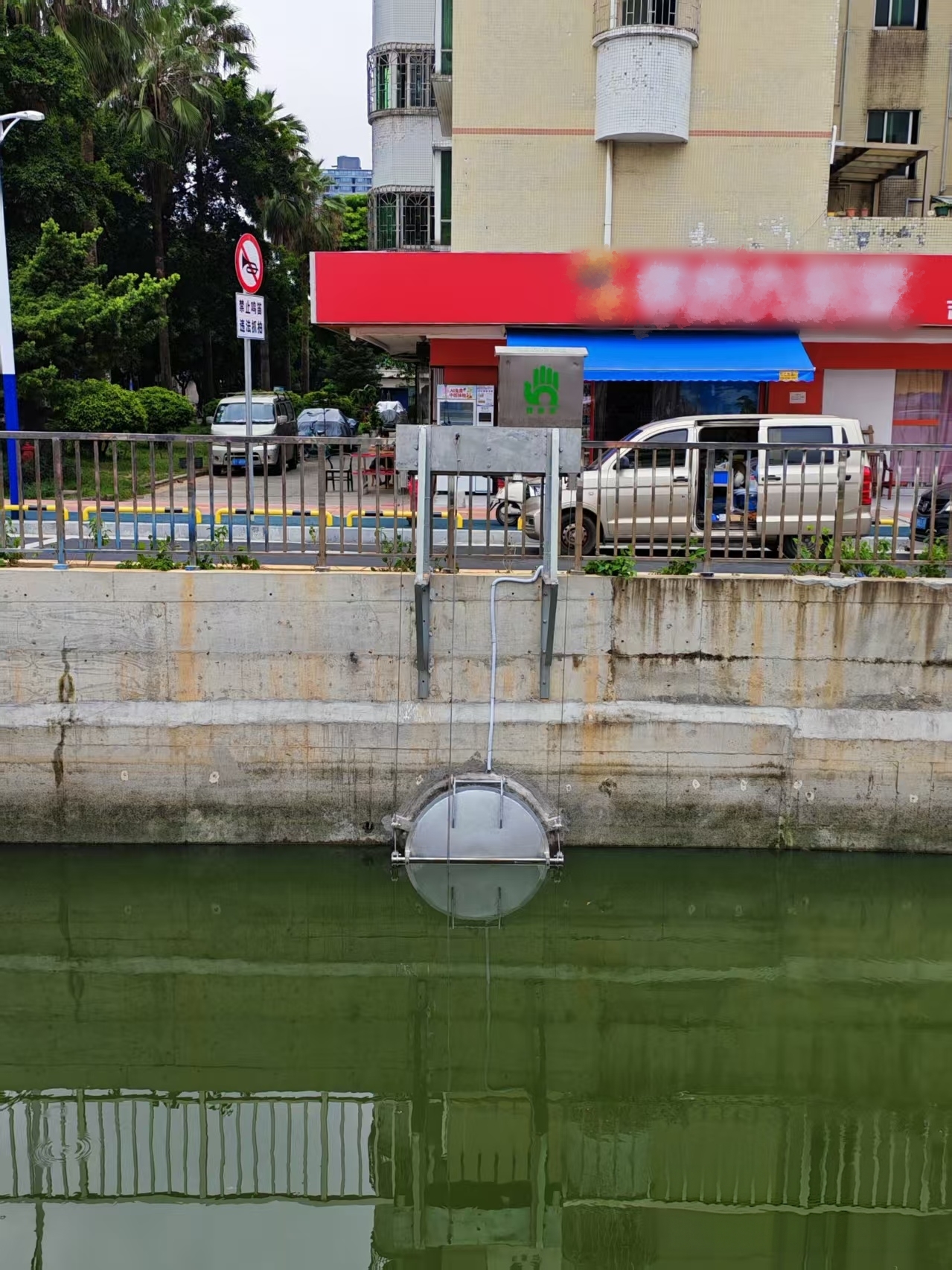
In a traditional combined system, one pipe carries both. In heavy rain, the surge overflows directly, causing both flooding and pollution. For older districts where full separation is not yet feasible, a HIGHDE Smart Outfall System Device (smart flap gate) can be installed at the pipe terminus. Its patented flexible structure ensures sealing, and it adjusts opening automatically based on pipe and river levels: closed in dry weather to prevent sewage discharge, open at the rainfall threshold for flood release, and closed again when the river rises to block backflow.
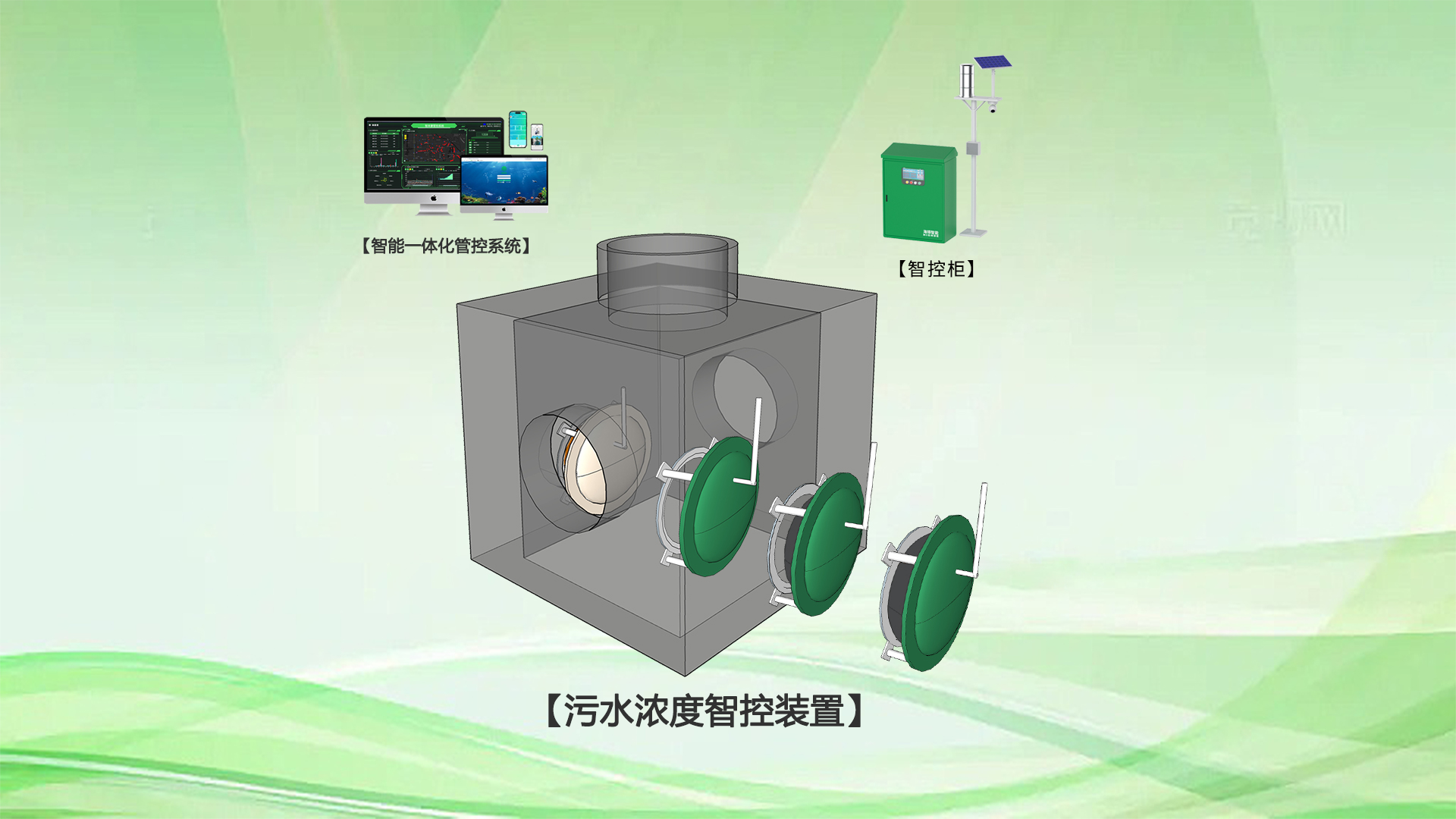
Where the goal is improving treatment plant efficiency, a Wastewater Concentration Intelligent Control Device (SPPT) can be installed in the interception well to control the interception channel, preventing rainwater from diluting influent concentration.
3. Core value of separation projects
Restore drainage capacity. Rainwater no longer competes with sewage for pipe space; on combined networks, smart flap gates dynamically control the outlet and mitigate downstream backwater.
Cut pollution entering rivers. Prevent wet-weather mixed sewage discharges at source and control overflow precisely to balance interception and drainage.
Digital O&M at lower cost. The HAIOT platform monitors equipment remotely and alarms automatically, reducing site inspections; concentration control devices protect influent concentration and lower treatment energy use.
4. Implementation
New districts build separate networks to standard; older districts require network surveys to locate defects and wrong connections. For retained combined culverts and terminal outfalls, HIGHDE's smart flap gate supports in-situ trenchless installation in complex conditions, with projects delivered in Guangzhou, Foshan, Zhaoqing, Zhuhai, Dongguan and Jiangmen. The HAIOT platform then provides centralised control to close the smart drainage O&M loop.
Summary
Combined sewers make one pipe do two jobs and buckle under storm load; separation lets two networks specialise, improving drainage and protecting river water. Flood control is a system effort: separation is the foundation, complemented by pipe upgrades, storage facilities and sponge-city measures, with digital smart-drainage control as the key to better performance.
As a smart integrated governance provider for plants, stations, networks and rivers, HIGHDE combines the Smart Outfall System Device, the Wastewater Concentration Intelligent Control Device and the HAIOT platform to support everything from survey and deployment to platform O&M - controlling outfall operation end to end, reducing flood risk and protecting urban waterways.
How are urban flooding and combined sewer overflow related, and how are they addressed?
4 Q&As from our knowledge base
【Expand for more answers】
How does the ZhiLaiZhang smart outfall device achieve zero discharge in dry weather and precise interception in rainy weather?
The device integrates level, flow and water quality sensing at the outfall. In dry weather, it identifies abnormal sewage and automatically triggers interception while raising an alarm. In rainy weather, it dynamically adjusts the interception ratio based on rainfall intensity and internal pipe level, preventing sewage from entering the river while avoiding large volumes of rainwater entering the sewer system and overloading the network.
How does ZhiLaiZhang achieve active flood drainage?
The intelligent outfall system device "ZhiLaiZhang" (i-Water-SPM) achieves active flood drainage and intelligent monitoring of the outfall manhole through the anti-flooding pump and level detection inside its chamber, and delivers precise control of the sewage level. Its configurable dimensions cover: three base-pump types (hot-dip galvanized steel, stainless steel, and a fiberglass combination), three power-source types (mains power, battery, hydraulic, solar, diesel/gasoline), four control methods (forced/automatic, remote, local program, cyclic inspection), and discharge arrangements covering standalone, piped, yard, pump, siphon and other scenarios. The device provides camera-based night detection with AI alarming, four remote functions (communication / inspection / remote control / remote adjustment), an API for data interfacing, and a design life of no less than 10 years. Five diameters are covered — 500, 800, 1000, 1200, 1500 and 2000 — with the pipe diameter, material, level measurement method and other options specified through combinations of 7-digit parameter codes.
What are the threefold challenges of a single outfall, and how does ZhiLaiZhang solve them?
Take the terminal outfall of a combined sewer system (CSS) network as an example: three mutually conflicting objectives exist at the same location. Rainy days: the network is running full, so the gate must be opened for flood drainage, otherwise waterlogging follows. Dry weather: the network level is low, so the gate must be closed for sewage interception, otherwise black-odorous water spills out. During flood stages: the receiving river is at a high water level, so the gate must be closed to prevent backflow, otherwise the wastewater treatment plant influent is diluted. The conventional approach relies on manual attendance, which inevitably fails during the flood season. ZhiLaiZhang instead assigns all three objectives to the three-criterion linkage of liquid level, rainfall, and float switch for automatic decision-making: any single criterion that triggers is executed immediately, and local decision-making still works when power or network connectivity is lost. What it solves: the three classic difficulties at the terminal outfall of a combined sewer system (CSS) network — overflow, backflow, and waterlogging. It replaces the traditional gravity flap gate with a high-torque direct-drive motor plus a flexible-direction, multi-point force-transfer structure. Because flexible redirection means that "closing" no longer depends on self-weight, neither the installation location nor the diameter is constrained: it can be installed in manholes, box culverts, under bridges, and on irregular surfaces.
Into how many layers can the value of the ZhiLaiZhang solution be divided?
The value is broken down below into four layers — environmental value, economic value, management value, and safety value — so that each layer can be drawn on according to the customer's focus. 6.1 Environmental value Metric Data Source Wastewater plant influent concentration Increased by 40% Stamped application form River backflow volume 0 Stamped application form Rainy-day flood drainage Automatically opens within seconds according to water level Stamped application form Dry-weather outfall No black-odorous water discharge Stamped application form River reach coverage 100+ reaches, covering 10 districts and towns Official PPT Equipment scale 1000+ units running online stably over the long term Official PPT + stamped application form 6.2 Economic value Metric Data Source No-excavation retrofit investment About 65% lower than excavated intelligent separation wells Official website case study + promotional plan Annual power cost per unit 400W single-phase 220V, averaging no more than 300 CNY Multiple official website articles + promotional plan Labor replaced by unmanned boat 2 cleaning staff per boat Stamped application form Labor cost saving over 6 years More than 700,000 CNY (static calculation) Stamped application form Static investment payback period About 10 months Stamped application form 6.3 Management value Metric Data O&M efficiency benchmark Four people manage 1,000 devices Routine inspection cycle Once every two weeks + 7×24-hour AI online inspection Remote opening adjustment One opening adjustment completed within 22 seconds, with no need for staff on site and no need to excavate or shut off water Event traceability A three-layer closed loop covering personnel, equipment and work matters, with the entire process from alarm to closure fully recorded 6.4 Safety value Metric Data Cleaning staff safety factor Increased by 100%, essentially eliminating personal injury accidents Power-loss flood discharge capability Automatically opens for flood discharge on power loss, network loss or over-pressure (something an electric sluice gate cannot do) Emergency closure Remote forced closure of the gate panel under accident or abnormal conditions, preventing pollutant spillage and dispersion Platform security certifications ISO27001 information security management system, CSA-STAR cloud computing security, Ministry of Public Security cybersecurity certification